Clay soils common around Troy drain slowly. After a thaw or heavy rain, water can perch in the top layers and sit against patios and foundations. Excavating alone does not fix every wet yard—but grading, outlets and French drains are tools that often help. This article explains the ideas. For service details see drainage and French drains and site prep and grading.
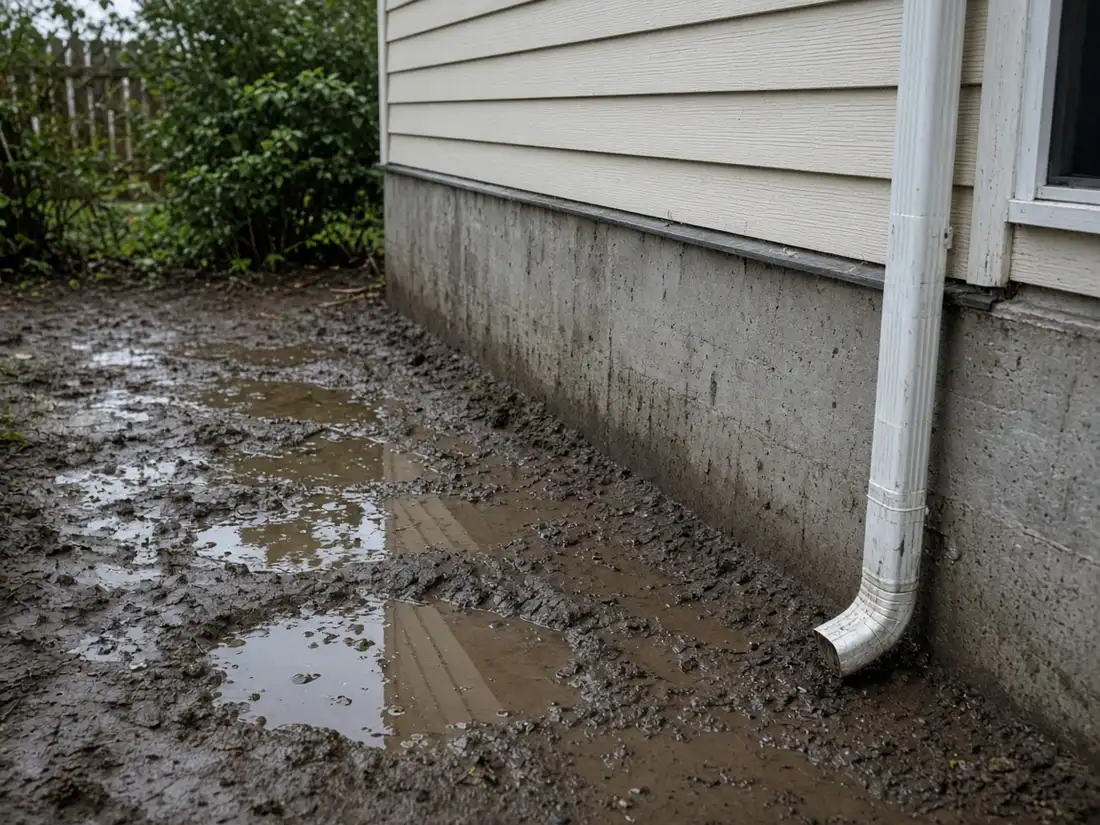
Why Clay Stays Wet
Troy and nearby Rochester Hills sit largely on glacial soils with clay that holds water and softens in spring. That slows digging, increases rutting risk and can require mats or tracked machines on finished lawns. Water follows the path of least resistance. If finish grade tips toward the house, or a swale was filled during fencing, puddles return every spring.
Common Fix Patterns
- Regrading to restore fall away from the foundation
- Shallow swales that move surface water to a legal outlet
- French drains (perforated pipe in stone) that collect groundwater
- Downspout extensions so roof water is not dumped on clay near the wall
- Outlet checks so you are not pumping water onto a neighbor or into a blocked structure
A trench without a working outlet is just a long puddle. Outlet design matters as much as pipe diameter.
What an Excavator Needs to See
Visit after rain if you can. Photos of ice sheets in winter help. Note sump discharge points, buried downspouts and low fences that dam water. Call MISS DIG 811 before digging.
Cost Drivers Without Invented Numbers
Depth, length, stone, fabric, lawn restoration, and whether a hard outlet exists all change price. National articles quote wide ranges; your clay moisture and access will dominate. Compare written scopes.
Next Step
Describe where water sits and your zip code when you contact Troy Excavating. We will connect you with a local excavating contractor familiar with Oakland County clay yards.
Diagnosing the Wet Spot
Not every wet area needs a French drain. Sometimes gutters dump onto a flat clay shelf. Sometimes a patio was installed without pitch. Sometimes fill from a pool dig blocked an old swale. Walk the yard during a storm if it is safe. Note whether water is surface runoff or seeping up. Seepage suggests groundwater or a high perched water table; surface water suggests grading and roof drainage first.
French Drain Anatomy in Plain Language
A typical yard French drain uses a sloped trench, perforated pipe, clean stone and fabric to limit silt. The pipe must outlet somewhere legal: a storm structure, a ditch you may use, or a pop-up emitter in a place that will not flood the neighbor. Daylighting onto the sidewalk is not a plan. Footing drains around basements are related but usually tie into sump systems and waterproofing scopes.
Excavating Near Foundations
Digging beside a foundation for exterior waterproofing or drain tile is a specialized trench. It can undermine walks and need shoring awareness. Coordinate with waterproofing contractors so the hole is open only as long as needed. See also basement excavation when a deeper cut is planned.
Maintenance After Installation
Keep cleanouts accessible. Avoid planting trees whose roots seek perforated pipe. Do not drive heavy equipment over shallow drains without protection. If water returns, check outlets for clogs before assuming the trench failed.
Clay-Specific Tips for Oakland County
Expect sticky spoil that does not make good structural backfill. Ask what material returns around the pipe. Fabric quality and stone cleanliness matter more in fines-rich clay. Seasonal timing helps: midsummer production often beats April mud.
Request Help
Share videos of the puddle and your city when you contact us. We will introduce a local excavator. Read drainage services next.
When Excavating Is the Wrong First Move
If water only appears because a gutter elbow is missing, start with roof drainage. If a neighbor's regrade dumped water onto your lot, document it and talk before trenching. Excavating is powerful and disruptive; use it when grading and simple outlet fixes are not enough. A good estimator will say when not to dig.
Combining Drains With Other Site Work
The cheapest French drain is often the one installed while a basement wall is already exposed or while a driveway is already open. If you know a pool, patio or addition is coming, ask whether drainage should ride along in the same mobilization. That planning is part of lot prep.
Talking to Contractors Without Getting Lost
Ask where the water will go, what stone and fabric they use, how deep the trench is, and what restoration is included. Ask who owns cleanouts. Write those answers into the proposal. If two bids differ by a lot, the scopes are probably different—not magic pricing.
Seasonal Expectations in Southeast Michigan
Spring shows every drainage sin. Summer is easier digging but may hide problems until the first autumn storm. Fall installs should leave outlets working before freeze-up. Winter emergency trenches happen; expect slower production and temporary patches.
Troy and South Oakland Yard Patterns
In Troy, wet side yards often sit between closely spaced homes where fences and A/C pads pinch flow paths. Rochester Hills and Clawson lots show similar clay behavior with different tree cover. When you request help, mention nearest cross streets so an excavator can judge truck staging near Coolidge, Rochester Road or Big Beaver corridors. Downspouts that empty onto clay next to the foundation are a frequent local contributor—extend them before assuming a deep drain is mandatory.