Before a basement dig or building pad can start, many lots need clearing: brush, small trees, fence rows and surface debris. In Troy and south Oakland County, that work ranges from a backyard edge cleanup to opening a larger parcel. This guide explains typical clearing steps and planning questions. It is educational, not a quote. See also land clearing and site prep and grading.
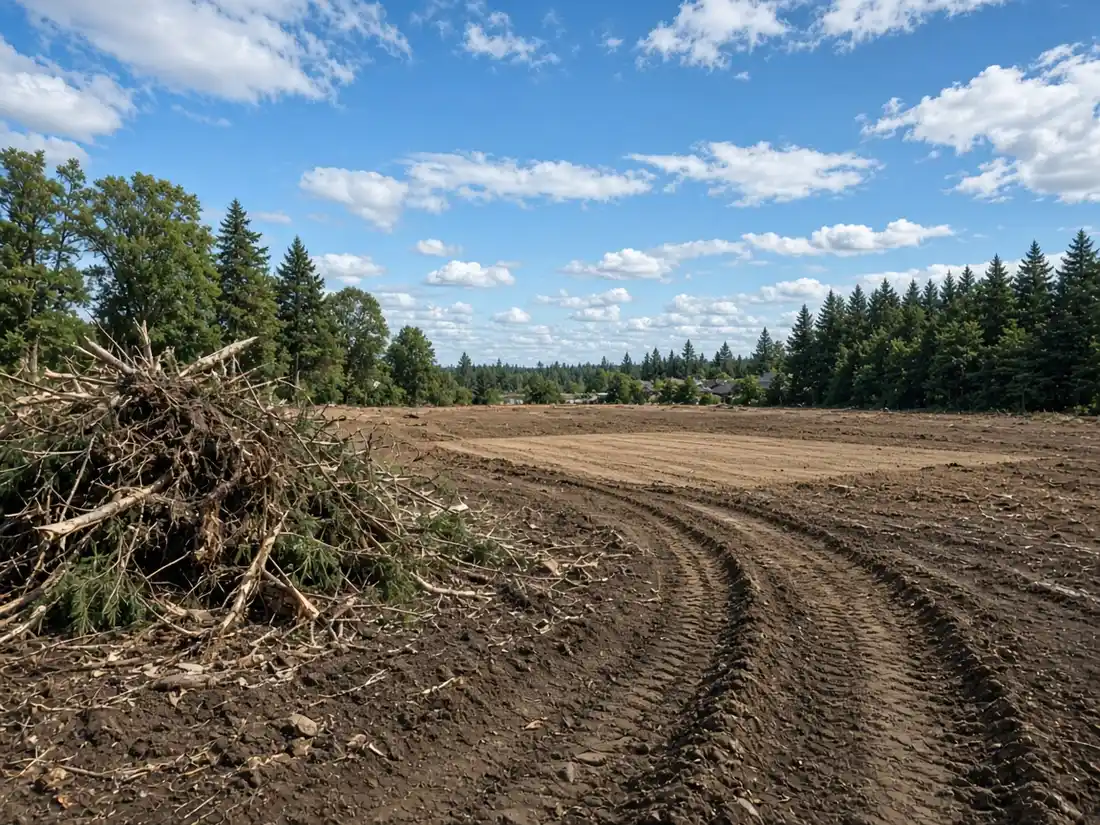
What Clearing Usually Covers
- Cutting and stacking brush
- Removing small trees (large hazardous trees may need a licensed arborist)
- Stump grinding or stump removal with an excavator
- Windrowing debris and loading trucks
- Rough raking so graders can see true ground
While Troy is largely built out, homeowners still clear overgrown edges, storm-damaged brush and rear lots before grading or fencing. Nearby Bloomfield Hills and Rochester Hills parcels more often need larger clearing before a build.
Permits and Sensitive Areas
Tree ordinances, wetland edges and drain corridors can limit what you remove. Troy and county rules vary. Ask the building or planning office before clearing near drains, ponds or wooded conservation areas. Soil erosion permits may apply when you disturb larger areas.
Order of Operations
- Confirm property lines and easements.
- Mark trees that must stay.
- Call MISS DIG if roots or stumps will be dug.
- Clear brush and timber.
- Deal with stumps.
- Rough grade or proceed to basement excavation / pad prep.
Clearing without a grade plan can leave low spots that hold water in clay. If drainage is already a problem, discuss wet-yard fixes early.
Cost Factors (Qualitative)
Price moves with density of vegetation, stump count, burn/chip/haul options, access for trucks, and whether the crew also grades afterward. We do not invent per-acre numbers here. Ask for a site walk.
Next Step
Troy Excavating can introduce a local clearing-capable excavator. Request a quote with photos of the vegetation and gate access.
Wildlife, Neighbors and Timing
Clearing in spring nesting season or during drought burn bans changes methods. Chipping on site reduces trucking but creates chip piles to manage. Hauling logs and brush off site keeps the lot cleaner for surveyors. Talk through disposal in the quote. Notify neighbors if shared fence rows are involved so property line disputes do not erupt mid-job.
Stumps: Grind vs. Dig
Grinding leaves roots in place and is often fine under lawns. Building pads and footing lines usually need stumps and major roots removed so they do not rot into voids. Excavators can dig stumps, but the holes need proper backfill and compaction. Decide based on what will be built above.
Erosion Control After Clearing
Bare clay after clearing is an erosion risk. Silt fence, inlet protection and temporary seed may be required. Leaving the lot raw through a wet month can send fines into drains and create inspection problems. Pair clearing with a grading plan when possible—see lot prep.
Firewood, Salvage and Debris Sorting
Some owners want logs cut to firewood length; others want everything gone. Sorting metal, concrete and vegetative debris can lower dump costs but takes time. Spell out sorting expectations so crews do not mix loads.
Machine Choice
Brush cutters, skid steers with grapple buckets, and excavators each fit different vegetation. Soft spring ground may limit heavy trucks until mats or gravel are placed. Share photos of standing water and gate width.
Next Actions
Mark keepers, call about permits, then request a clearing quote referral. Related pages: land clearing, site prep.
Survey Flags Before the Brush Hog
Clearing past a property line creates expensive neighbor problems. Have corners marked. Photograph fence lines before work. If a shared fence must come down for access, get written agreement. Utility poles and guy wires also limit swing radius for excavators pulling stumps.
Aftercare: Dust, Mud and Seed
Bare clay blows dust in August and sheets mud in April. Temporary mulch, tackifier or seed may be part of responsible clearing. Ask what the site will look like two weeks after the crew leaves, not only on day one.
Built-Out Troy vs. Edge Lots
Much of Troy is already developed, so "clearing" is often selective: storm-damaged trees, overgrown rear fence lines, or brush before a garage addition. Larger clearing shows up more toward Bloomfield Hills and Rochester Hills parcels. Either way, protect survey monuments and irrigation heads you want to keep. After clearing, schedule grading promptly so clay does not crust into a skating rink of mud. Pair this article with site prep and grading and lot prep.
Safety Around Falling Timber and Overhead Lines
Even "small" clearing can drop branches onto neighbors' roofs or into power lines. Spotters, drop zones and utility awareness matter. If lines cross the lot, call the utility before felling nearby trees. Wear and require basic PPE on site. Chipper accidents are common in brush work—keep bystanders away.
Cost Conversation Without Fake Numbers
Dense brush with many stumps costs more than light weed trees. Haul-off versus on-site chipping changes trucking. Wet access that needs mats adds time. Ask for a walkthrough bid that lists disposal method, stump handling and whether rough grade is included. Troy Excavating can introduce a crew after you share photos via the contact form.
Keep Learning
Use the related service pages linked above for scope details, then come back to this guide when you are comparing written proposals. Clear scopes beat vague promises. When you are ready for an introduction to a local excavating contractor, use the quote form or call the number at the top of the page.